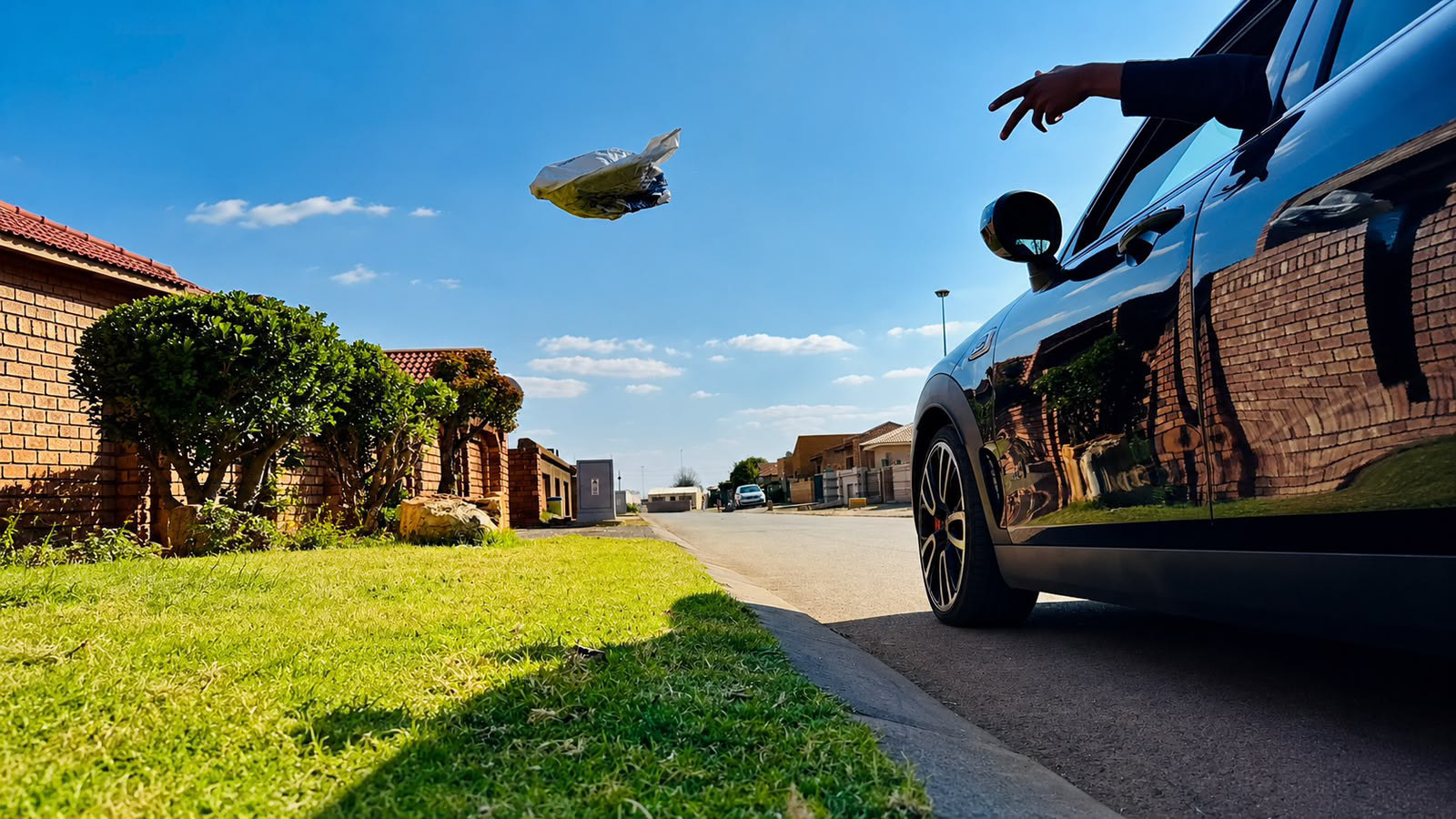
The problem isn't waste. It's behaviour.

South Africa has a litter problem, but the real issue isn't waste itself. It's the behaviours, attitudes and social norms that have made littering acceptable. Every piece of litter begins with a decision.

Where behaviour becomes visible.

Litter is the visible symptom of an invisible problem — the everyday decisions, habits and norms behind it.

Normalised Littering

Public spaces are often treated as belonging to “someone else”. When litter is ignored it becomes normal, reducing community pride and reinforcing negative behaviours.

Environmental Damage

Litter pollutes rivers, blocks drainage systems, damages ecosystems and contributes to flooding — harming both nature and the people who depend on it.

Public Health & Inequality

Poor waste management affects everyone, but it impacts vulnerable communities the most — increasing pollution, health risks and reducing access to clean, safe public spaces.

Behaviour & Social Norms

The real problem is not waste — it is behaviour, social norms and the systems that allow littering to continue without consequence.

The cost of doing nothing.

The cost of litter extends far beyond waste — it affects our economy, health, environment and quality of life.

Economic Impact

R0B+

Estimated annual cost of plastic litter to South Africa's economy and marine environment.

Plastic Consumption

0 Billion

Plastic carrier bags used by South Africans every single year.

Shared Responsibility

0 Million

Reasons why keeping South Africa clean is everyone's responsibility.

Litter is learned behaviour.

People aren't born littering. They learn from what they see.

When public spaces are neglected, neglect becomes expected. Expected behaviour becomes normal. Normal behaviour becomes culture.

Ignored litter
Acceptance
More littering
Less pride
Behaviour becomes culture

Change the behaviour. Change the culture.

Why this matters to every South African.

Cleaner Communities

Cleaner neighbourhoods improve quality of life and restore community pride.

Better Public Health

Less litter reduces pollution, pests and environmental health risks.

Protected Wildlife

Reducing litter protects animals, rivers and natural ecosystems.

Reduced Flooding

Cleaner drainage systems reduce blockages and minimise flood risks.

Stronger Tourism

Cleaner public spaces strengthen South Africa's image and support local economies.

Community Pride

When people take ownership of shared spaces, stronger communities are built.

A Culture of Responsibility

Every action shapes culture.

Every piece of litter sends a message. It tells the next person: “This place doesn't matter.”

Every positive action sends a different message. It says: “This community is worth caring for.”

Clean South Africa exists to build a country where caring for public spaces becomes part of everyday life — and where littering is no longer socially acceptable.

Behaviour can change.

Lasting environmental change begins with people. Discover how education, awareness, action and community ownership work together to create cleaner, healthier and more resilient communities.

People shape places.

Places shape behaviour.

Behaviour shapes culture.

Culture shapes the nation.